Table of Contents
Toggle10TH ENGLISH LESSON 4 : Long Walk to Freedom
10TH ENGLISH LESSON 4 : Long Walk to Freedom is one of the most inspiring chapters in the Class 10 English syllabus. The lesson is based on the life and struggles of Nelson Mandela, the first Black President of South Africa. It highlights the long fight against apartheid, racial discrimination, and injustice. The chapter teaches students the importance of courage, equality, freedom, sacrifice, and humanity.
The lesson is not only a historical account but also a source of moral inspiration for students across the world. Nelson Mandela’s journey from imprisonment to presidency is an example of determination and hope. Through this lesson, students learn that freedom is precious and that true leaders work for the welfare of all people.
Long Walk to Freedom glossary & vocabulary
Key words from Nelson Mandela's autobiography — rendered in English, اُردُو, and हिन्दी
| Word | Meaning in English | Meaning in Urdu اردو | Meaning in Hindi हिन्दी |
|---|---|---|---|
| Besiege | to surround closely | گھیر لینا | घेर लेना |
| Dignitaries | people holding high rank | معزز شخصیات | गणमान्य व्यक्ति |
| Amphitheatre | large circular auditorium | گول تماشہ گاہ | गोल रंगमंच |
| Podium | raised platform for speaking | اسٹیج | मंच |
| Awe | feeling of great respect | حیرت و احترام | आदर मिश्रित आश्चर्य |
| Bedeck | to decorate | سجانا | सजाना |
| Chevron | V-shaped badge/design | وی شکل کا نشان | वी आकार का चिन्ह |
| Confer | to give | عطا کرنا | प्रदान करना |
| Outlaw | rebel | باغی | विद्रोही |
| Emancipation | freedom from restriction | آزادی | मुक्ति |
| Deprivation | lack of rightful benefits | محرومی | वंचना |
| Discrimination | unfair treatment | امتیازی سلوک | भेदभाव |
| Spectacular | impressive display | شاندار | शानदार |
| Rein | control | قابو | नियंत्रण |
| Not mindful of | unaware of | بے خبر | अनजान |
| Despise | to hate / look down upon | نفرت کرنا | घृणा करना |
| Wrought | achieved / done | انجام دیا گیا | किया हुआ |
| Profound | deep / strong | گہرا | गहरा |
| Resilience | ability to recover from hardship | ثابت قدمی | कठिनाइयों से उबरने की शक्ति |
| Pushed to our limits | pushed to extreme suffering | انتہا تک دھکیل دیا گیا | सीमा तक धकेलना |
Nelson Mandela: Long Walk to Freedom
About Nelson Mandela
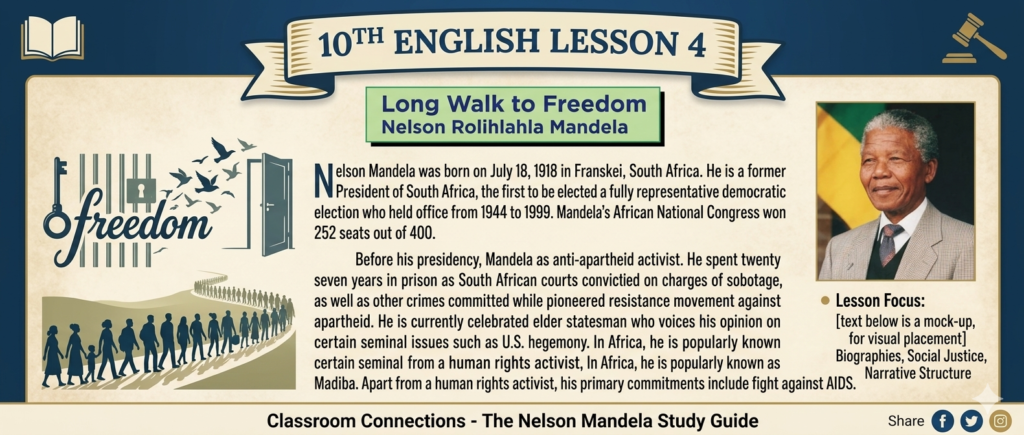
Nelson Mandela was born on July 18, 1918, in South Africa. He became one of the greatest leaders in world history because of his struggle against apartheid. Apartheid was a cruel system in South Africa where Black people were treated unfairly and denied equal rights.
Mandela spent nearly 27 years in prison because he fought for justice and equality. Despite facing hardships, he never gave up. After his release, he continued his struggle peacefully and finally became the President of South Africa in 1994.
In 10TH ENGLISH LESSON 4 : Long Walk to Freedom, Mandela shares his thoughts and experiences during his inauguration ceremony. His speech reflects wisdom, forgiveness, and hope for a better future.
Main Themes of the Lesson
1. Freedom and Equality
The central theme of the chapter is freedom. Mandela believed that every human being deserves equal rights and dignity. He fought not only for his own freedom but also for the freedom of his people.
The lesson teaches that freedom is meaningful only when everyone in society is free. Mandela wanted South Africa to become a nation where people of all races could live peacefully together.
2. Courage and Sacrifice
Another important theme in 10TH ENGLISH LESSON 4 : Long Walk to Freedom is courage. Mandela showed extraordinary bravery throughout his life. Even after spending many years in prison, he remained strong and hopeful.
He sacrificed his personal life, comfort, and happiness for the freedom of his people. His sacrifices remind students that success often requires dedication and hard work.
3. Forgiveness and Humanity
Mandela believed in forgiveness rather than revenge. After becoming President, he did not hate the white rulers who had imprisoned him. Instead, he worked to unite all South Africans.
This lesson teaches students the value of kindness, peace, and humanity. It shows that hatred can destroy societies, while forgiveness can build nations.
Mandela’s Inauguration Ceremony
The inauguration ceremony described in the lesson is emotional and memorable. Mandela takes the oath as the President of South Africa in the presence of thousands of people and many world leaders.
He feels proud because his country has finally become free from racial discrimination. Military leaders salute the new democratic government, symbolizing loyalty to the nation rather than racial rule.
Mandela also remembers the countless freedom fighters who sacrificed their lives for the country’s independence. He says that he is “simply the sum of all African patriots,” acknowledging the contribution of others in the struggle.
Mandela’s Understanding of Freedom
One of the most meaningful parts of the lesson is Mandela’s changing understanding of freedom.
As a child, Mandela believed that freedom meant playing freely and living happily. As a young man, he thought freedom meant choosing his profession and living independently. However, as he grew older, he realized that true freedom means ensuring equal rights for everyone.
This realization transformed his life completely. He dedicated himself to fighting against oppression and injustice. His hunger for freedom made him a revolutionary leader.
The System of Apartheid
Apartheid was a policy of racial segregation introduced by the white government in South Africa. Under this system, Black people were treated as inferior citizens.
They were denied voting rights, proper education, and equal opportunities. Public places, schools, hospitals, and transport systems were divided based on race.
In 10TH ENGLISH LESSON 4 : Long Walk to Freedom, Mandela calls apartheid an “extraordinary human disaster.” He believed that no society could progress while discrimination existed.
The chapter teaches students about the harmful effects of racism and inequality. It encourages readers to support justice and human rights.
Relevance of the Lesson in Modern Times
Even today, the message of this lesson remains highly relevant. Many societies still face discrimination, inequality, and injustice.
Mandela’s life teaches people to stand against oppression and support human dignity. His message of peace and equality continues to inspire global movements for justice and freedom.
In modern times, students can learn from Mandela’s patience, resilience, and leadership qualities. The lesson reminds everyone that positive change is possible through determination and unity.
Conclusion
10TH ENGLISH LESSON 4 : Long Walk to Freedom is much more than a chapter in a textbook. It is a lesson about courage, sacrifice, equality, and humanity. Nelson Mandela’s inspiring journey from prisoner to President shows that determination and hope can overcome even the greatest challenges.
The chapter encourages students to respect freedom and stand against injustice. It also teaches the importance of forgiveness, peace, and unity in building a better society.
By studying this lesson, students not only improve their English skills but also learn important moral values that can guide them throughout life. Nelson Mandela’s story will continue to inspire generations to fight for truth, justice, and human dignity.