The long-pending Rehbar-e-Taleem (ReT) issue in Jammu and Kashmir has finally received major relief from the Supreme Court of India. In a significant judgment delivered on May 2, 2026, the apex court directed the Jammu and Kashmir administration to issue engagement orders within eight weeks to eligible candidates selected under the ReT scheme.
The judgment has brought hope to hundreds of aspiring teachers who had been waiting for years despite being included in the select panels prepared under the ReT recruitment process. The Supreme Court clearly observed that the closure of the ReT scheme cannot be used as a reason to deny appointments retrospectively to candidates who had already secured positions in duly prepared selection lists.
This historic verdict is expected to impact many families across Jammu and Kashmir, especially in rural areas where the ReT scheme once played a crucial role in strengthening the education system.
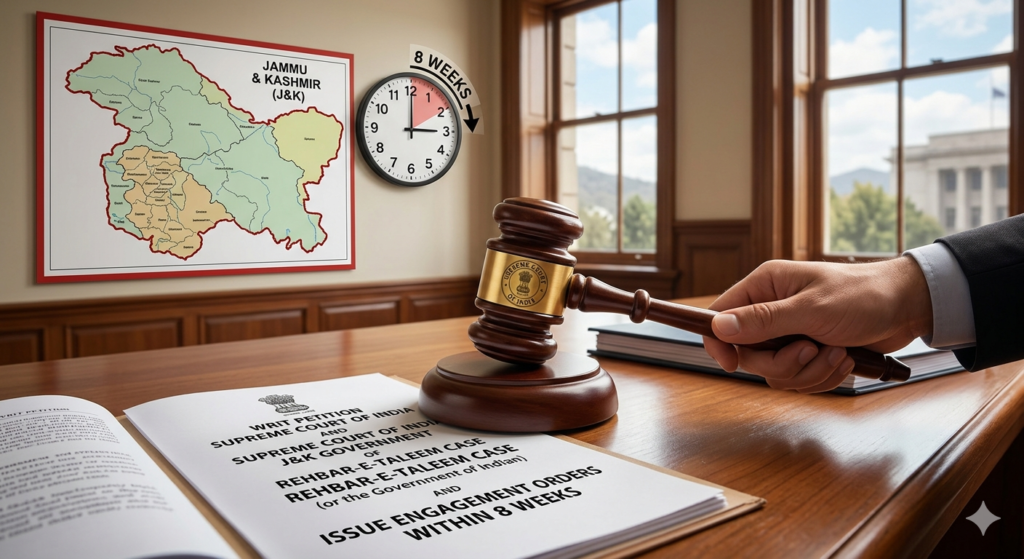
Table of Contents
ToggleWhat is the ReT Scheme?
The Rehbar-e-Taleem (ReT) scheme was introduced in Jammu and Kashmir to improve the educational infrastructure in remote and underserved villages. Under this scheme, local educated youth were engaged as teachers in government schools to address the shortage of teaching staff.
The scheme aimed to:
- Improve literacy in rural areas
- Provide employment opportunities to educated youth
- Strengthen government schools in far-flung regions
- Encourage local participation in education
Thousands of candidates applied under the scheme, and selection panels were prepared based on merit and eligibility criteria.
However, after the implementation of new recruitment policies and the eventual discontinuation of the ReT scheme, many selected candidates were left without engagement orders despite being included in finalized select lists.
Background of the Supreme Court Case
The matter reached the Supreme Court after several affected candidates approached the judiciary seeking justice. One of the key cases included the Union Territory of Jammu and Kashmir versus Saba Wani.
The petitioners argued that:
- They were legally selected under the ReT scheme.
- Their names had already been included in official select panels.
- Delays caused by administrative changes should not deprive them of appointments.
- The closure of the scheme occurred after the selection process had already been completed.
Earlier, the High Court had passed directions in favor of the selected candidates. The matter was later challenged before the Supreme Court by the administration.
After hearing the arguments, the Supreme Court upheld the rights of the selected candidates and modified certain High Court directions while protecting the appointments of eligible aspirants.
Supreme Court’s Major Observations
The Supreme Court made several important observations while disposing of the batch of petitions.
1. Closure of Scheme Cannot Deny Existing Rights
The apex court observed that once candidates had already been selected and included in valid select panels, the later closure of the ReT scheme could not be applied retrospectively to deny them engagement.
This observation is considered highly important because it protects the legitimate expectations of candidates who had already completed the selection process successfully.
2. Merit and Vacancy Must Be Considered
The court directed that appointments should be made strictly according to:
- Availability of vacancies
- Merit position of candidates
This means the administration must honor the select lists while ensuring that appointments are granted fairly and transparently.
3. Eight Weeks Deadline
The Supreme Court directed the Jammu and Kashmir administration to issue formal engagement orders within eight weeks.
This fixed timeline is crucial because many candidates have already faced years of uncertainty and delays.
Relief for Hundreds of Aspirants
The judgment has come as a major relief for many educated unemployed youth in Jammu and Kashmir.
Several candidates had crossed years waiting for engagement despite clearing all required stages of recruitment. Many had approached courts individually, while others remained hopeful that the judiciary would protect their rights.
With this latest Supreme Court ruling, affected aspirants now expect the administration to implement the directions without further delay.
Importance of the Judgment in J&K Recruitment Matters
The verdict is being viewed as a landmark judgment in recruitment-related disputes in Jammu and Kashmir.
The decision reinforces the principle that:
Administrative policy changes cannot unfairly cancel rights already accrued to selected candidates.
Legal experts believe the judgment may also influence future service matters involving:
- Recruitment delays
- Selection list disputes
- Administrative restructuring
- Policy transitions
The ruling strengthens the concept of fairness in public employment.
Impact on Education Sector
The engagement of ReT candidates can positively impact the education sector in Jammu and Kashmir, particularly in rural schools where teacher shortages continue to affect learning outcomes.
Potential benefits include:
Better Teacher Availability
Government schools in remote villages often struggle with staff shortages. Fresh engagements can improve student-teacher ratios.
Support for Rural Education
Local teachers understand the social and linguistic environment of their communities, helping students learn more effectively.
Employment Generation
The judgment also provides employment opportunities to deserving youth who had remained jobless despite selection.
Reactions from Candidates
After the Supreme Court verdict, many candidates expressed relief and happiness.
Several aspirants stated that:
- They had waited for justice for many years.
- The decision restored their faith in the judiciary.
- They now expect speedy implementation by authorities.
Social media platforms in Jammu and Kashmir also witnessed widespread discussion regarding the verdict, with many users welcoming the decision.
What Happens Next?
Following the Supreme Court order, the Jammu and Kashmir administration is expected to:
- Review the finalized select panels
- Identify available vacancies
- Verify merit positions
- Issue formal engagement orders
- Complete the process within eight weeks
Candidates are advised to remain updated through official notifications and education department announcements.
Challenges in Implementation
Although the judgment is clear, implementation may still require careful administrative coordination.
Possible challenges may include:
- Vacancy verification
- Record reconciliation
- Seniority considerations
- District-wise adjustments
However, the Supreme Court’s strict timeline places responsibility on authorities to complete the process efficiently.
Legal Significance of the Verdict
The Supreme Court’s decision highlights several constitutional and administrative principles:
Protection of Legitimate Expectation
Candidates selected through lawful procedures have legitimate expectations of appointment.
Fair Administrative Action
Government authorities must act fairly and reasonably while implementing recruitment policies.
Non-Retrospective Application
Policy changes generally cannot take away vested rights retrospectively unless specifically authorized by law.
These principles strengthen transparency and trust in public recruitment systems.
Hope for Other Pending Recruitment Cases
The verdict may encourage candidates involved in similar recruitment disputes across Jammu and Kashmir and other regions.
Many aspirants facing delays in government appointments often approach courts seeking relief against:
- Cancellation of recruitment
- Delay in appointments
- Policy shifts
- Administrative inaction
The ReT judgment demonstrates that courts continue to protect lawful rights of selected candidates.
Conclusion:
The Supreme Court’s direction to the Jammu and Kashmir administration to issue engagement orders within eight weeks in the ReT case marks a major victory for deserving candidates who had been waiting for years.
By ruling that the closure of the ReT scheme cannot retrospectively deny appointments to candidates already included in select panels, the apex court has reinforced fairness, legality, and transparency in public recruitment.
The judgment not only provides relief to affected aspirants but also strengthens confidence in the judicial system. As the administration moves toward implementation, thousands of families across Jammu and Kashmir now look forward to long-awaited justice and employment opportunities.
The coming weeks will be crucial as authorities begin the process of issuing formal engagement orders in compliance with the Supreme Court’s directive.
FAQs
What is the ReT scheme in Jammu and Kashmir?
The Rehbar-e-Taleem (ReT) scheme was a teacher engagement program introduced in Jammu and Kashmir to provide education in rural areas and create employment opportunities for local educated youth.
What did the Supreme Court say in the ReT case?
The Supreme Court directed the Jammu and Kashmir administration to issue engagement orders within eight weeks to eligible candidates selected under the ReT scheme.
Why is the judgment important?
The judgment protects the rights of candidates who were already included in valid select panels before the ReT scheme was discontinued.
Will all selected candidates get appointments?
The court directed that appointments should be made according to available vacancies and merit positions.
Which case was involved in the Supreme Court hearing?
One of the major cases involved the Union Territory of Jammu and Kashmir versus Saba Wani.
What is the deadline given by the Supreme Court?
The administration has been directed to issue engagement orders within eight weeks from the date of the order.
How will the judgment affect education in J&K?
The engagement of teachers may improve staffing in rural government schools and strengthen the education system in underserved areas.
Can this judgment help candidates in similar recruitment disputes?
Yes, legal experts believe the verdict may influence future recruitment-related cases involving delays, policy changes, and appointment disputes.