Table of Contents
ToggleCTET Solved Paper: The Ultimate Guide to Qualifying Paper I and Paper II with High Marks
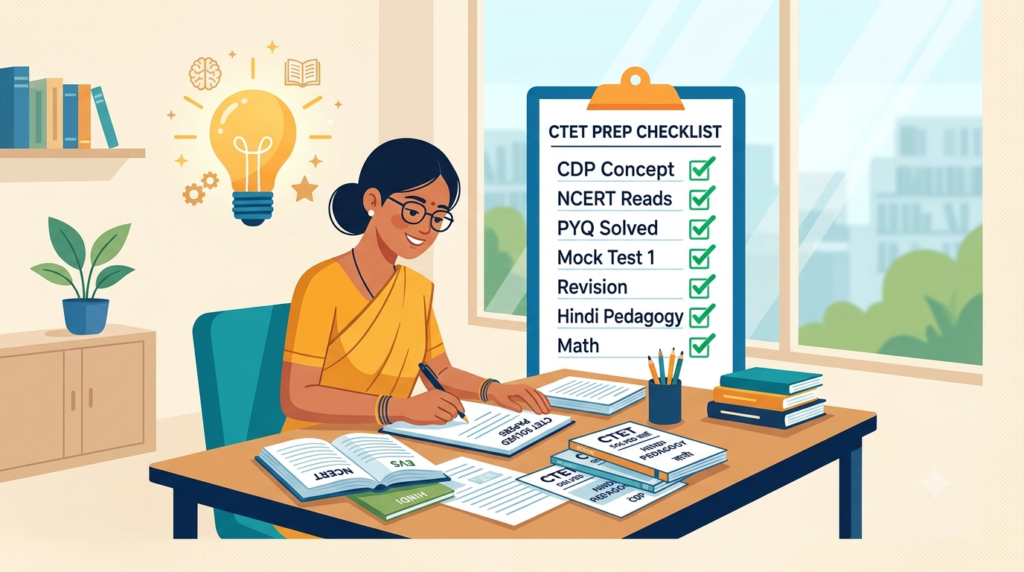
Preparing for the Central Teacher Eligibility Test (CTET) conducted by the Central Board of Secondary Education (CBSE) is a major milestone for every aspiring teacher in India. Whether you aim to teach primary classes (Classes I to V) or elementary classes (Classes VI to VIII), qualifying CTET is mandatory for securing teaching positions in central government schools such as Kendriya Vidyalayas (KVS), Navodaya Vidyalayas (NVS), Army Public Schools, and numerous state and private institutions across the country. While standard textbooks, NCERT books, and coaching notes lay your theoretical foundation, practicing a CTET solved paper is widely recognized by toppers and educators as the single most decisive factor in clearing the examination on your very first attempt.
In recent years, the nature of the CTET examination has evolved considerably. CBSE has moved far beyond direct, memory-based questions and now emphasizes competency-based assessment, critical thinking, assertion-reasoning items, and real-world classroom pedagogy. Simply memorizing definitions of developmental theories will no longer guarantee the qualifying mark of 90 out of 150 (60% for the General category). Instead, candidates must develop a strong pedagogical mindset—and nothing builds that mindset faster or more reliably than working systematically through authentic previous years’ question sets.
In this comprehensive guide, we will explore why every serious aspirant must prioritize past papers, break down the latest CTET exam pattern and syllabus weightage, walk through a detailed practice set with explanations, and share a step-by-step study blueprint to maximize your score.
Why Practicing a CTET Solved Paper Is Essential for Exam Success
Many candidates spend months reading bulky guidebooks from cover to cover, only to feel overwhelmed when they sit in the examination hall. The primary reason for this disconnect is a lack of familiarity with how CBSE constructs questions and frames distractors. Integrating a CTET solved paper into your weekly study routine bridges the gap between passive reading and active exam performance in several critical ways.
1. Decoding the Evolution of CBSE Question Framing
CTET questions are uniquely worded. Often, all four multiple-choice options appear plausible at first glance, and the candidate must select the most child-centered, constructivist, and inclusive response. Reviewing solved papers trains your eyes to spot subtle pedagogical cues, identify negative qualifiers such as “NOT,” “EXCEPT,” or “LEAST,” and understand the exact logic CBSE evaluators use when releasing official answer keys.
2. Identifying High-Yield Topics and Repeated Concepts
When you analyze multiple previous question papers side by side, clear patterns emerge. Certain foundational concepts appear in almost every single examination cycle:
Child Development & Pedagogy (CDP): Jean Piaget’s stages of cognitive development, Lev Vygotsky’s sociocultural theory and Zone of Proximal Development (ZPD), Lawrence Kohlberg’s moral development stages, Howard Gardner’s theory of multiple intelligences, progressive education, inclusive education, continuous and comprehensive evaluation (CCE), and the National Education Policy (NEP) 2020.
Language Pedagogy: Acquisition versus learning, Noam Chomsky’s Language Acquisition Device (LAD), Stephen Krashen’s comprehensible input hypothesis, multilingualism as a classroom resource, and diagnostic/remedial teaching.
Subject Pedagogy: Nature of mathematics (Van Hiele levels of geometric thought), integrated Environmental Studies (EVS) themes, and inquiry-based social science or science teaching.
3. Mastering Time Management Without Negative Marking
The CTET examination consists of 150 multiple-choice questions to be completed in 150 minutes (2 hours and 30 minutes). That gives you exactly one minute per question. While there is no negative marking in CTET—meaning you should attempt every single question—candidates frequently run out of time because Language I and Language II contain lengthy unseen prose and poetry passages, and CDP questions often feature multi-statement assertion-reason formats. Timed practice builds the reading stamina required to finish comfortably with 10 to 15 minutes left for final review.
4. Learning Elimination Strategies Through Detailed Explanations
An ordinary answer key only tells you whether Option A or Option C is correct. By contrast, a high-quality CTET solved paper provides step-by-step explanations that clarify why the correct answer aligns with modern educational psychology and why the remaining three distractors are flawed. Over time, this analytical habit enables you to eliminate incorrect choices swiftly even when you encounter an unfamiliar question on exam day.
CTET Exam Pattern and Syllabus Structure at a Glance
Before diving into practice questions, it is vital to have complete clarity on the examination blueprint for both levels. Candidates who wish to teach Classes I through VIII may appear for both Paper I and Paper II on the same day.
CTET Paper I Exam Pattern (For Classes I to V – Primary Stage)
Paper I evaluates a candidate’s readiness to teach young learners at the foundational and preparatory stages. Every section carries equal weightage:
| Subject / Section | Number of Questions | Maximum Marks | Nature of Questions |
| Child Development & Pedagogy (CDP) | 30 | 30 | Educational Psychology & Inclusive Teaching (Ages 6–11) |
| Language I (Compulsory) | 30 | 30 | 15 Unseen Passage + 15 Language Pedagogy |
| Language II (Compulsory) | 30 | 30 | 15 Unseen Passage + 15 Language Pedagogy |
| Mathematics | 30 | 30 | 15 Content (NCERT Class 1–5) + 15 Math Pedagogy |
| Environmental Studies (EVS) | 30 | 30 | 15 Content (NCERT Class 3–5) + 15 EVS Pedagogy |
| Total | 150 | 150 | Duration: 150 Minutes (No Negative Marking) |
CTET Paper II Exam Pattern (For Classes VI to VIII – Elementary Stage)
Paper II is designed for upper primary teachers. While the first three sections share a similar structure with Paper I (calibrated to the cognitive level of learners aged 11–14), the fourth section depends on the candidate’s academic background:
| Subject / Section | Number of Questions | Maximum Marks | Nature of Questions |
| Child Development & Pedagogy (CDP) | 30 | 30 | Adolescent Psychology & Learning Processes (Ages 11–14) |
| Language I (Compulsory) | 30 | 30 | 15 Comprehension + 15 Language Pedagogy |
| Language II (Compulsory) | 30 | 30 | 15 Comprehension + 15 Language Pedagogy |
| Mathematics & Science OR Social Studies/Social Science | 60 | 60 | 40 NCERT Content (Class 6–8) + 20 Subject Pedagogy |
| Total | 150 | 150 | Duration: 150 Minutes (No Negative Marking) |
Notice that across both papers, pedagogy accounts for nearly 75 to 90 marks out of 150. This makes pedagogical reasoning the backbone of CTET preparation.
Sample CTET Solved Paper: Subject-Wise Practice Questions with Detailed Solutions
To demonstrate how conceptual clarity combines with smart elimination, work through the following representative questions modeled directly on recent CBSE trends. Try selecting your answer before reading the explanation below each item.
Question 1: Child Development & Pedagogy (Constructivism)
In a constructivist classroom aligned with the recommendations of NEP 2020 and NCF, how should a teacher view errors made by students during problem-solving?
(A) As evidence of careless study habits that require immediate correction through repetitive drills
(B) As valuable windows into the child’s thinking process and natural steps in learning
(C) As indicators that the student should be placed in a lower-ability remedial section
(D) As failures of memory retention that must be penalized in formative grading
Correct Answer: (B) As valuable windows into the child’s thinking process and natural steps in learning
Detailed Explanation: Constructivist pedagogy (championed by Piaget and Vygotsky) views learners as active builders of knowledge. Errors are not signs of incompetence; rather, they reveal alternative conceptions or the specific stage of reasoning a child is currently using. A skilled teacher analyzes these errors to scaffold instruction. Options (A), (C), and (D) rely on behaviorist drills, labeling/segregation, and punitive assessment, all of which contradict child-centered education.
Question 2: Inclusive Education
A teacher has a student with visual impairment in an upper primary classroom. Which of the following accommodations best reflects the principles of inclusive education?
(A) Excusing the student from participating in science experiments and group discussions
(B) Providing tactile learning materials, audio descriptions, and large-print or Braille resources alongside peers
(C) Seating the student in a separate corner of the classroom with an isolated curriculum
(D) Asking classmates to complete all written assignments on the student’s behalf
Correct Answer: (B) Providing tactile learning materials, audio descriptions, and large-print or Braille resources alongside peers
Detailed Explanation: Inclusive education means educating all children together in the same regular classroom while adapting teaching aids, infrastructure, and assessment methods to ensure equitable participation. Excusing the child (A) or isolating them (C) violates inclusion, while doing the work for them (D) undermines learner autonomy.
Question 3: Language Pedagogy
While teaching English as a second language, a teacher encourages learners to draw upon words and sentence structures from their home languages to understand a new story. This pedagogical practice is known as:
(A) Grammar-Translation Overload
(B) Translanguaging and Multilingualism as a Resource
(C) Language Interference Suppression
(D) Direct Method Immersion
Correct Answer: (B) Translanguaging and Multilingualism as a Resource
Detailed Explanation: Both the National Curriculum Framework (NCF) and NEP 2020 strongly advocate viewing a child’s mother tongue or home language as a cognitive asset rather than a barrier. Allowing students to bridge concepts across languages deepens comprehension, lowers anxiety, and promotes metalinguistic awareness.
Question 4: Mathematics Pedagogy (Paper I & II)
According to Van Hiele’s model of geometric thinking, at which level can a student recognize a square as a special type of rectangle based on relationships among properties?
(A) Level 0: Visualization
(B) Level 1: Analysis
(C) Level 2: Abstraction / Informal Deduction
(D) Level 4: Rigor
Correct Answer: (C) Level 2: Abstraction / Informal Deduction
Detailed Explanation: At Level 0 (Visualization), children identify shapes by overall appearance (e.g., “it looks like a door”). At Level 1 (Analysis), they list properties of individual shapes separately. At Level 2 (Abstraction/Informal Deduction), learners understand logical relationships between properties and realize that because a square satisfies all properties of a rectangle, every square is a rectangle.
Question 5: Environmental Studies / Social Science Pedagogy
Which of the following assessment tools is most appropriate for documenting a student’s gradual progress, creative projects, reflections, and self-evaluations over an entire academic term?
(A) Standardized Summative Term-End Exam
(B) Student Portfolio
(C) Weekly Multiple-Choice Quiz
(D) Attendance Register
Correct Answer: (B) Student Portfolio
Detailed Explanation: A portfolio is a purposeful, cumulative collection of a student’s work over time that demonstrates effort, progress, and achievement across diverse tasks. Unlike one-off written tests (A and C), portfolios support holistic, formative assessment.
How to Use a CTET Solved Paper for Maximum Score Improvement
Simply reading through questions and answers passively will yield limited results. To extract the highest possible value from every CTET solved paper you attempt, follow this structured four-stage methodology:
Stage 1: Simulate Real Examination Conditions
Download or print a full-length paper and sit at a quiet desk with an OMR sheet or blank response sheet. Set a strict timer for 150 minutes. Do not check your phone, refer to notes, or look up explanations until the timer ends. Practicing OMR bubble filling is especially important because marking 150 circles accurately takes roughly 12 to 15 minutes during the actual offline examination.
Stage 2: Perform a Deep Error Audit
Once you calculate your score, spend at least two hours reviewing the entire paper—including the questions you answered correctly by guessing. Categorize every mistake into one of three buckets:
Conceptual Gap: You did not know the underlying theory or NCERT fact (e.g., forgetting the functions of vitamins in Class 6 Science or a specific historical reform in Class 8 Social Science).
Reading Oversight: You missed keywords like NOT, Incorrect, or Except, or rushed through an unseen passage.
Pedagogical Mindset Error: You chose a teacher-centered, textbook-bound, or discipline-heavy option instead of a child-centered, exploratory option.
Stage 3: Maintain a Dedicated “CTET Mistake & Pedagogy Notebook”
Whenever you encounter a new educational term, psychological concept, or tricky NCERT statement in a CTET solved paper, jot it down in a concise revision notebook. Within three to four weeks, this notebook will become your personalized high-yield revision guide containing only the concepts that test your weak areas.
Stage 4: Pair Past Papers with NCERT Textbooks
For the content sections of Paper I (EVS Classes 3–5 and Math Classes 1–5) and Paper II (Science/Math or Social Science Classes 6–8), CBSE frames questions almost line-by-line from NCERT textbooks. Whenever a past paper question tests a factual detail—such as traditional water harvesting systems in Rajasthan, tribal movements in modern India, or properties of acids and bases—open the corresponding NCERT chapter and revise the surrounding paragraphs.
Common Mistakes Aspirants Make While Solving Previous Year Papers
Even dedicated students can lose 15 to 20 crucial marks if they fall into common preparation traps:
Ignoring Language I and Language II: Many aspirants focus exclusively on CDP and their main subject while neglecting language sections. Remember that Languages I and II together carry 60 marks—40% of the entire paper. Practicing comprehension passages and language pedagogy questions regularly can easily push your total score past 115+.
Relying on Unverified Answer Keys: Always verify solutions against the official CBSE CTET answer keys. Unofficial blogs or hastily compiled guides occasionally contain inaccurate keys for assertion-reason questions.
Starting Practice Too Late: Waiting until the final week before the exam to attempt your first CTET solved paper leaves no time to fix conceptual gaps. Begin solving at least two full papers per week at least six to eight weeks prior to the exam date.
Frequently Asked Questions (FAQs) About CTET Solved Papers
1. How many years of CTET solved papers should I practice?
Aim to solve at least the last 8 to 10 examination cycles (including both Paper I and Paper II sets from recent years). Focusing heavily on papers from 2021 onward will expose you to the latest competency-based and NEP 2020-aligned question styles.
2. Can I qualify CTET solely by studying NCERT books and previous year papers?
Yes. A thorough reading of NCERT textbooks (Classes 3–8 according to your paper choice) combined with rigorous practice and analysis of every CTET solved paper from recent cycles is widely considered sufficient to score well above the qualifying cutoff.
3. What is the qualifying score in CTET?
Candidates belonging to the General category must score at least 60% (90 out of 150 marks) to receive the CTET eligibility certificate. Candidates belonging to reserved categories (SC, ST, OBC, Differently Abled) generally receive a 5% relaxation (82 out of 150 marks) as per extant government norms.
Conclusion
Cracking the Central Teacher Eligibility Test does not require memorizing encyclopedias of obscure facts; it requires clarity of concepts, thorough familiarity with NCERT fundamentals, and an empathetic, learner-centered approach to classroom teaching. Making a CTET solved paper the centerpiece of your preparation transforms uncertainty into confidence, sharpens your time management, and equips you to handle even the trickiest pedagogical scenarios with ease. Start with one full-length paper today, analyze every question honestly, and watch your accuracy climb steadily toward your teaching goal.